Moadra impressions: Brutal Combat, Beautiful Secrets
Early Moadra impressions explore its demanding combat, alien atmosphere, scanner-driven secrets, and launch concerns. Find out whether to try the demo.
Moadra Impressions: A Familiar Formula With Sharper Edges
A gorgeous alien world is inviting—until its inhabitants start filling the screen with projectiles. These early Moadra impressions point to a Metroid-inspired adventure where demanding combat and obscure routes can matter as much as finding your next upgrade. If you want to know whether that challenge sounds rewarding or exhausting, these Moadra impressions break down the strengths, friction points, and reasons to try the demo first.
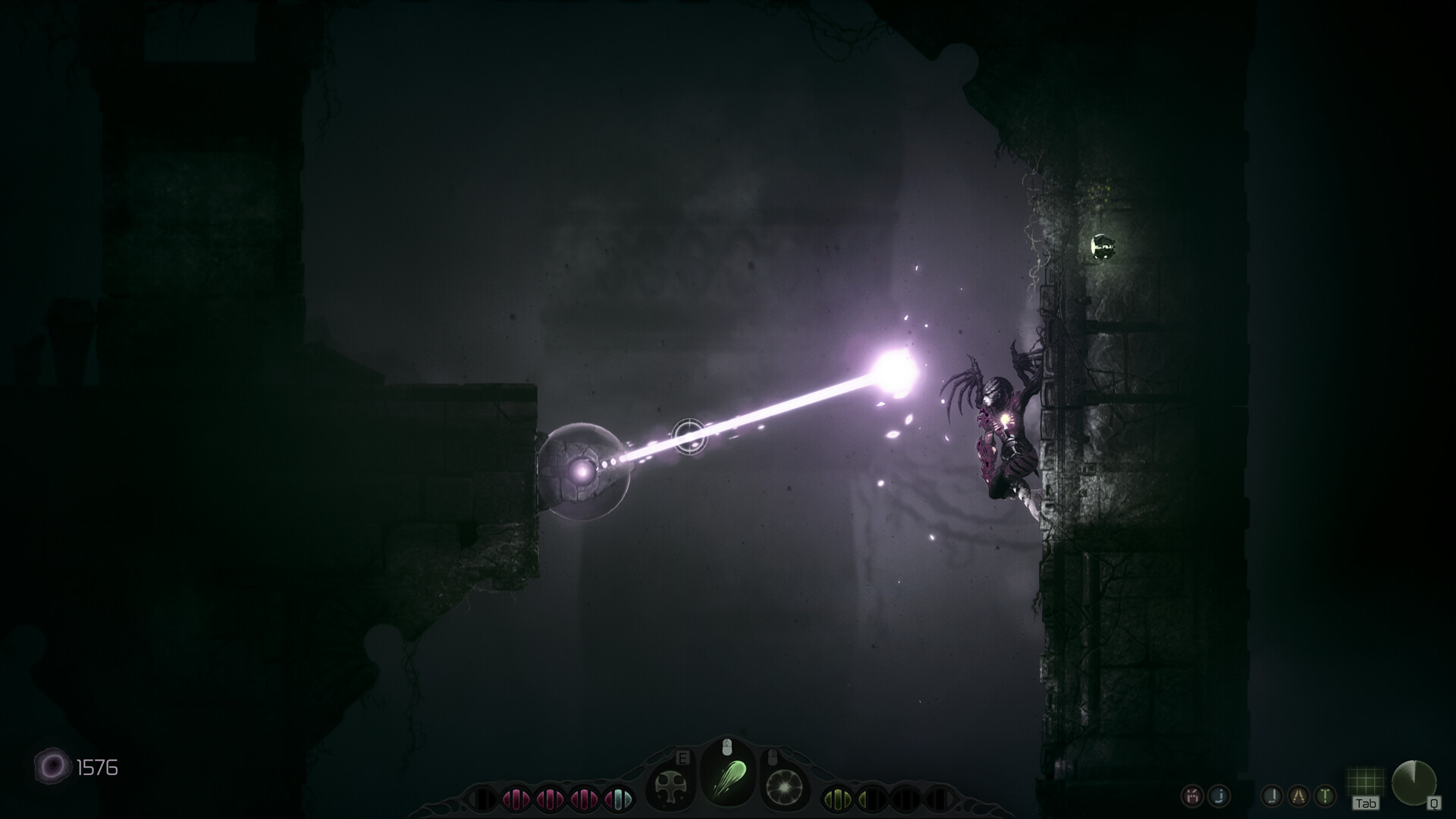
Official screenshot · Source: Steam store
Developed and published by Gloomsoft, Moadra launched on Steam on October 22, 2026. Its arm cannon, aerial somersaults, interconnected environments, and collectible energy pickups make its influences immediately recognizable. However, biological upgrades, X-ray exploration, and aggressive enemies give it more than a nostalgic premise.
Scope note: This is a source-based assessment, not a firsthand playthrough or scored review. It draws on an early gameplay impressions video covering roughly eight to ten hours, official Steam information, and clearly identified launch-day player experience. The video creator disclosed receiving a review key.
| At a glance | Details |
|---|---|
| Developer and publisher | Gloomsoft |
| Steam release date | October 22, 2026 |
| Core experience | Single-player sci-fi Metroidvania |
| Standard US Steam price | $24.99 |
| Introductory US Steam price | $22.49, listed through November 5 |
| Steam Deck status | Verified |
| Demo | Available, with progress transfer announced |
| Main reservation | Combat difficulty and navigation can interrupt exploration |
Prices and review figures here reflect the October 23 source snapshot and may change.
Alien Atmosphere Gives the Metroid Influence Its Own Identity
Moadra takes place on Protea VI, a dangerous planet connected to the history of the Neera. You play a Neera soldier investigating an expedition that has stopped communicating. An early encounter leaves the protagonist gravely injured, and an experimental biological intervention becomes the foundation for new abilities.
That premise connects character progression to the setting. Your evolving arsenal is not merely equipment collected from convenient storage rooms; it is tied to an unsettling organism whose nature remains uncertain.
The comparison with Metroid Fusion is understandable, but Moadra’s appeal rests on how it develops its own biological mystery.
Animation is a major early selling point
The supplied gameplay impressions consistently praise the detailed environments and animation. Flips, aiming poses, locomotion, and enemy attacks reportedly give even routine movement a strong visual identity.
That matters in a game built around revisiting spaces. Backtracking becomes easier to enjoy when moving through a familiar corridor remains satisfying, rather than feeling like time spent between discoveries.
Protea VI also offers environmental variety. Official descriptions include desolate surface regions, freezing summits, and research facilities overrun with alien life. Frequent gore and organic imagery reinforce the hostile atmosphere.
The strongest visual takeaway from these Moadra impressions is that presentation appears to support the central fantasy: you are an adaptable organism exploring a world that is dangerous, unfamiliar, and potentially connected to your origins.
There is one important limit to that praise. These sources do not establish frame-rate consistency, loading performance, or technical stability across hardware. Attractive animation should not be mistaken for a comprehensive performance assessment.
Combat Rewards Aggression but Demands Resource Discipline
Moadra’s ordinary enemies appear capable of creating serious pressure. In the early video, creatures swarm the player, launch projectiles, and complicate movement through already hazardous rooms.
The result is described as having bullet-hell-like moments. That does not necessarily make Moadra a bullet-hell game, but it communicates the density of threats: multiple enemies and incoming shots can demand attention simultaneously.
An especially useful detail is that the player’s shots can counter many incoming projectiles, according to the video. Firing therefore serves a defensive purpose as well as dealing damage.
Your resources have different jobs
Understanding the pickup economy is essential to understanding these Moadra impressions.
| Resource | Main function | Practical implication |
|---|---|---|
| Green orbs | Refill energy for special attacks | Powerful weapons require replenishment |
| Red orbs | Restore health | Useful recovery, but not a substitute for avoiding damage |
| Limited instant heals | Provide on-demand healing | Offer another recovery option during dangerous encounters |
| Protoplasm | Funds weapon and ability upgrades | Turns fighting and exploration into long-term progression |
| Hidden expansions | Increase health or energy capacity | Give secret hunting a direct survival benefit |
The video describes enough energy for roughly three or four missiles at its current progression point. That is an example from one partial playthrough—not a universal capacity limit or an endgame assessment.
The broader lesson is reliable: do not expect unrestricted use of your strongest attacks.
Resource scarcity may create friction
One launch-day player experience criticizes the interaction between weapon-resistant enemies, limited special-weapon energy, and environmental barriers that also require those weapons. That player felt compelled to search for refills after combat.
This is a useful purchasing consideration, but it is not proof that the entire game suffers from the same problem. Upgrade choices, route selection, and progression could affect that experience.
Practical habits worth adopting include:
- Watch which attacks work before spending more special-weapon energy.
- Treat health and energy expansions as meaningful exploration rewards.
- Keep track of refill opportunities when entering unfamiliar territory.
- Spend Protoplasm deliberately rather than assuming every encounter will become easy.
- Evaluate whether repeated combat remains enjoyable when retracing a route.
The combat question is not simply whether Moadra is hard. It is whether its combination of pressure, resource management, and repetition feels engaging to you.
Scanning Makes Exploration Richer—and Sometimes Slower
The scanner is one of Moadra’s most distinctive tools. A controllable bot examines creatures, terminals, journals, and environmental details, combining world-building with practical exploration.
Its X-ray function can reveal passages hidden behind apparently solid terrain. That turns scanning into a way of reading the level, not just collecting optional background information.
At its best, the system connects curiosity with progress: investigate something suspicious, uncover a route, and discover an upgrade or another piece of the planet’s history.
| Exploration element | Potential reward | Potential friction |
|---|---|---|
| Environmental scanning | Lore and contextual clues | Frequent pauses to inspect objects |
| X-ray searches | Concealed passages and secret areas | Routes can remain obscure without scanning |
| Interconnected map | Meaningful backtracking and discovery | Unclear next steps can slow momentum |
| Hazardous platforming | Skill-based traversal | Failed jumps may require lengthy retries |
| Hidden upgrades | Better survivability and energy capacity | Thorough searching takes time |
The scanner has a reported control awkwardness
The video identifies a specific issue in concealed crawlspaces. Moadra moves with the left stick while the scanner is positioned with the right stick. Without the X-ray view covering the passage, the surrounding terrain can obscure your character’s route.
Managing both becomes more awkward when a tunnel also contains enemies or platforming.
That distinction matters: discovering a hidden passage may be satisfying, while keeping it visible during traversal can still feel cumbersome. The creator suggests a scanner-follow option as a possible improvement, but the sources do not confirm such a feature.
Critical paths can look optional
Another revealing example involves a crumbling-platform crossing above a valley. The video creator initially suspected it led primarily to a secret. Instead, it was also necessary to continue.
Failing the crossing meant looping through several rooms and enemies before another attempt.
These Moadra impressions suggest that progression depends on more than unlocking the correct ability. You may also need to reconsider routes that initially look like optional challenges.
Before assuming you are stuck:
- Read the current objective and recall recent dialogue.
- Inspect unexplored map edges and unresolved doors.
- Scan suspicious walls or seemingly enclosed spaces.
- Revisit difficult traversal routes rather than dismissing them as bonus content.
None of those steps guarantees a solution, but they match the exploration habits the reported design appears to reward.
Launch Reception: Promising, With Reasons to Try Before Buying
The October 23 Steam snapshot shows 80% positive reviews from 40 reviews counted in the store’s summary. That is encouraging, but the sample is small and comes immediately after launch.
The official Moadra Steam listing also confirms a demo and Steam Deck Verified status. For a game whose appeal depends heavily on movement, combat pressure, and navigation tolerance, the demo is particularly valuable.
The Moadra Steam community discussions and player reviews show differing reactions. Some players praise the atmosphere, smooth movement, and exploration. Others describe punishing bosses, confusing progression, or situations they believe have trapped their saves.
Community reports of softlocks remain unverified here. A player unable to find an exit is not automatically evidence of a reproducible progression bug. Nevertheless, those accounts are worth monitoring before committing to a long playthrough.
| Your preference | Likely fit | What to check first |
|---|---|---|
| Atmospheric sci-fi exploration | Promising | Whether scanning enhances your curiosity |
| Challenging ranged combat | Promising | Enemy pressure and early resource limits |
| Minimal direction | Potentially rewarding | Whether map reading feels satisfying |
| Relaxed, uninterrupted progression | More uncertain | Retry loops and navigation downtime |
| Steam Deck play | Officially supported as Verified | Your preferred readability and control setup |
A better demo checklist
Rather than using the demo only to admire the art, test the systems most likely to determine your enjoyment:
- Movement: Do aiming, jumping, and repositioning feel comfortable?
- Scanning: Is switching between exploration and inspection intuitive?
- Combat: Do busy encounters feel readable or overwhelming?
- Resources: Does limited energy encourage decisions or merely delay you?
- Navigation: Do discoveries outweigh the time spent searching for the next route?
Gloomsoft’s October 21 announcement says demo saves carry into the full game, reducing the cost of trying it first.
The overall verdict from these Moadra impressions is cautiously positive. Its strongest attractions are atmospheric world-building, expressive animation, and exploration that asks players to pay attention. Its biggest risks are the cumulative interruptions caused by difficult fights, repeated platforming attempts, and uncertain navigation.
For players who enjoy working through hostile worlds without much guidance, those qualities may be inseparable from the appeal. For everyone else, the demo is a better recommendation than an unconditional purchase.
FAQ: Moadra Impressions and Buying Questions
Is Moadra worth playing if you love Super Metroid?
These Moadra impressions suggest it deserves a look. Arm-cannon combat, ability-based exploration, hidden routes, and a hostile alien setting make the comparison relevant. Expect demanding encounters and potentially slower navigation rather than assuming the pacing will match Nintendo’s classic.
How difficult is Moadra?
The early gameplay video describes aggressive regular enemies, projectile-heavy encounters, and challenging platforming. Some launch-day player experience also highlights difficult bosses. These sources do not establish a complete difficulty curve, so the demo is the safest way to assess your comfort level.
Does Moadra have a demo, and does progress transfer?
Yes. The Steam listing includes a demo, and Gloomsoft’s October 21 announcement says demo progress carries into the full game. The announcement also lists control rebinding and a scan logbook among the updated demo’s features.
Is Moadra Steam Deck Verified, and how long is it?
Steam lists Moadra as Steam Deck Verified. The supplied sources do not establish a reliable completion time. The impressions video covers approximately eight to ten hours without presenting a completed playthrough, and individual Steam playtime totals should not be treated as campaign-length estimates.
Related Guides
Moadra demo review: Metroid Roots, Scanner Friction
Our Moadra demo review weighs alien exploration, evolving weapons, scanner frustrations, and updated-demo caveats for Metroid fans.
Moadra metacritic: Early Reviews and Score Guide
Check Moadra's Metacritic status, its first critic review, early Steam ratings, and what to know before buying this sci-fi Metroidvania.
Moadra opencritic: Review Score and Listing Guide
Check Moadra's OpenCritic listing, understand its -1 score field, and see what is—and isn't—confirmed about reviews and platforms.
Moadra price: Steam Launch Deal and Buying Guide
Check the Moadra price, Steam's $22.49 launch offer, its November 5 deadline, Xbox availability, and free demo details before buying.
Moadra PC: Requirements, Price, and Platform Guide
Explore Moadra PC requirements, Steam pricing, demo access, Steam Deck support, and Xbox Play Anywhere before choosing where to play.