Moadra review: A Brutal Sci-Fi Metroidvania
Our source-based Moadra review examines its brutal combat, alien atmosphere, scanner exploration, and early drawbacks to help you decide.
Moadra Review: The Early Verdict
An arm cannon is comforting until the entire room starts shooting back. This Moadra review examines a sci-fi Metroidvania whose aggressive enemies and alien mysteries could make it a compelling choice for players craving more than familiar nostalgia. The central question in this Moadra review is whether that demanding design rewards curiosity—or interrupts exploration too often.
Official screenshot · Source: Steam store
The early answer is promising, with qualifications. Gloomsoft’s debut pairs detailed creature animation and organic environments with projectile-heavy combat, upgrade hunting, and deliberately hands-off navigation. Its strongest appeal is to players who prefer the science-fiction side of the Metroidvania genre.
Review scope: This is a source-based launch assessment, not a firsthand, completed-game review. Gameplay analysis draws primarily on an impressions video covering roughly eight to ten hours, alongside official Steam information. That limits conclusions about late-game balance, bosses, story payoff, and overall technical consistency.
| At a glance | Details |
|---|---|
| Developer and publisher | Gloomsoft |
| PC release date | October 22, 2026 |
| Core format | Single-player sci-fi action-exploration |
| Regular Steam price | $24.99 USD |
| Listed launch offer | $22.49 through November 5 |
| Steam Deck status | Verified |
| Demo | Available on Steam |
Prices and store details reflect the supplied October 23 snapshot. The official Moadra Steam listing provides current purchasing information, requirements, and demo access.
Bottom line: Moadra looks worth investigating if you enjoy dangerous exploration and working out your own route. Players seeking relaxed traversal or frequent directional guidance should try the demo before buying.
Alien Atmosphere Gives Familiar Ideas an Identity
Moadra’s relationship with Metroid is immediately recognizable: ranged weapons, acrobatic movement, collectible upgrades, and a hostile interconnected planet. Those similarities establish expectations, but the biological horror gives the game a more specific personality.
You play as a Neera soldier investigating an expedition that has lost contact on Protea VI. The mission quickly becomes personal when a violent encounter leaves Moadra critically injured. A geneticist named Atael intervenes using mysterious native biomass, tying survival and new abilities to something poorly understood.
That setup gives progression a useful narrative foundation. Growing stronger is not simply a matter of collecting better equipment; it also means depending on an alien substance whose implications remain uncertain.
For this Moadra review, that connection between premise and progression is one of the most encouraging elements. It gives players a reason to investigate beyond finding the next locked passage.
Movement sells the setting
The supplied impressions particularly praise animation: aiming, flipping, moving through corridors, and watching enemies attack. These details matter in a side-scrolling adventure because players repeat basic actions constantly. Strong animation can make familiar traversal engaging long before another upgrade appears.
Protea VI also offers more than one kind of hostile environment. The official description includes desolate surface areas, freezing heights, and infested research facilities.
Player experience: A pre-release community discussion praised the unusual door transitions, organic resting areas, and atmosphere reminiscent of Alien and Predator. That is an individual player’s response, not evidence of broad consensus or final-release polish.
The mature-content warning is straightforward: expect frequent violence and gore. The biological imagery is central to the appeal, not an incidental visual flourish.
Combat Turns Ordinary Rooms Into Real Threats
The defining combat takeaway in this Moadra review is that regular enemies demand attention. Early impressions describe aggressive swarms and ranged attacks that can turn routine encounters into projectile-management problems.
This does not necessarily make Moadra a full bullet-hell game. It does mean that positioning, sustained fire, and awareness appear more important than simply recognizing an enemy and shooting first.
One especially important detail from the impressions is that the player’s shots can counteract many incoming projectiles. Offense therefore has a defensive function: firing can create breathing room as well as damage enemies.
| Combat element | Reported behavior | Practical response |
|---|---|---|
| Enemy groups | Can swarm and overwhelm | Control nearby threats before advancing |
| Incoming shots | Many can be counteracted by your fire | Use firing lanes to reduce pressure |
| Special attacks | Consume limited energy | Save them for dangerous clusters |
| Healing | Includes limited instant-use heals | Do not depend entirely on dropped health |
| Environmental hazards | Can overlap with enemy encounters | Assess landing space before jumping |
The resource system supports this pressure. Green pickups restore energy for special attacks, while red pickups restore health. Protoplasm, a dark biomass resource, pays for weapon and ability improvements at organic resting locations.
The impressions describe an early energy reserve supporting only a few missiles before needing replenishment. That is a point-in-progression observation, not a fixed capacity for the entire game.
How to approach the early fights
Three habits should help new players adjust:
- Treat basic enemies as meaningful threats. Charging into a room can expose you to multiple attack directions.
- Spend special energy intentionally. Clearing a dangerous cluster may be more valuable than using missiles on isolated targets.
- Heal before a situation collapses. Waiting for a health drop is risky when the available impressions describe those drops as insufficient on their own.
The promising part is that upgrades, resource collection, and combat all feed into one another. The uncertainty is how well this holds up over a full campaign. The supplied evidence does not establish late-game build variety, boss quality, or whether repeated firing becomes tiring.
Exploration Rewards Attention, but Can Break the Flow
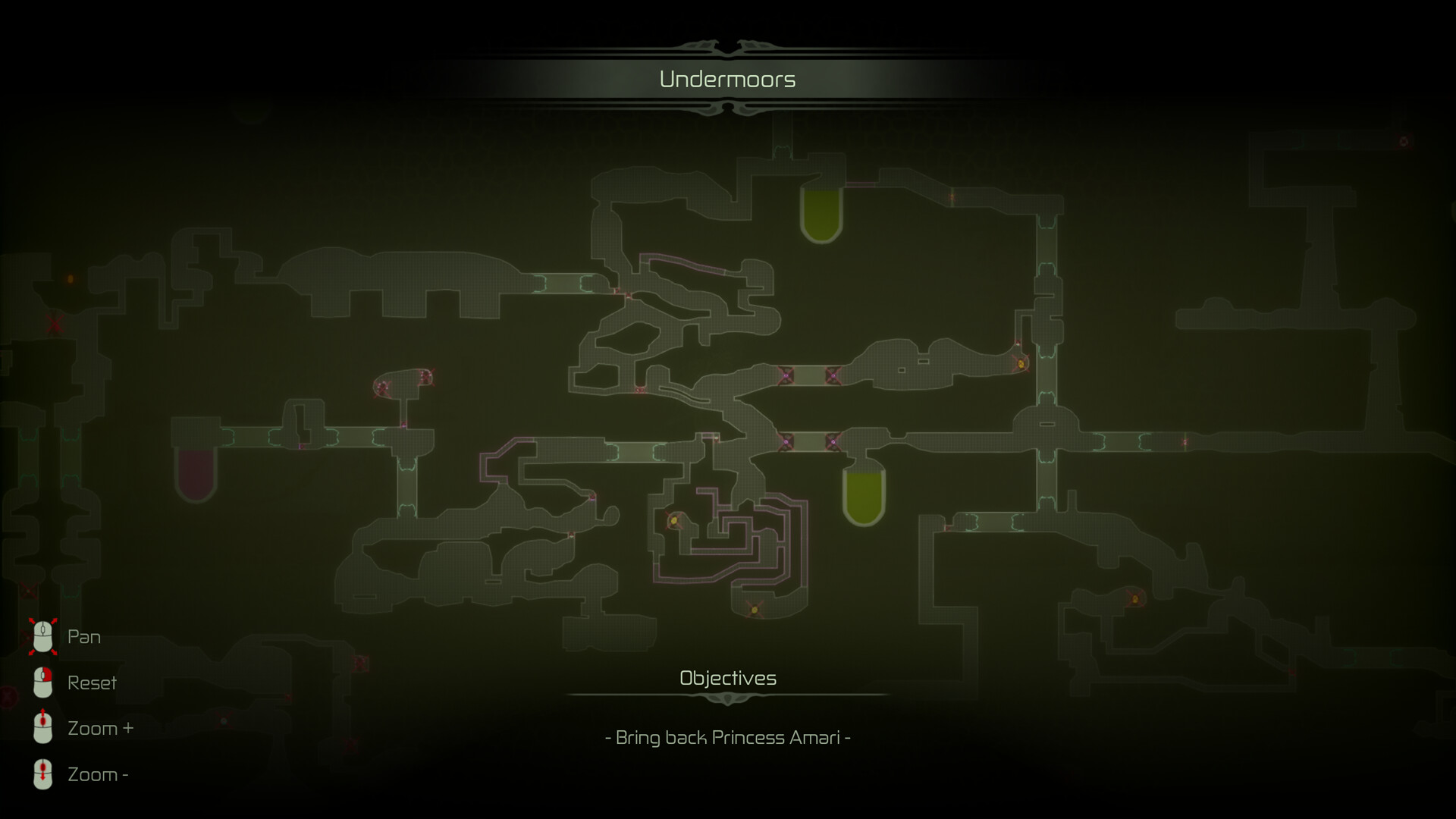
Moadra’s scanner is more than a lore viewer. Its X-ray functionality reveals concealed passages, while scanning terminals, creatures, and environmental objects adds context to the world.
That gives investigation two rewards: understanding Protea VI and discovering routes that ordinary observation might miss. For players who enjoy methodically examining suspicious walls, this could be a major attraction.
However, this Moadra review also needs to emphasize the scanner’s reported inconvenience. The impressions describe controlling Moadra with the left stick while independently moving the scanner with the right. Inside concealed tunnels, keeping the route visible can require managing both at once.
That becomes more awkward when a passage includes enemies or platforming rather than a simple horizontal crawl.
| Exploration system | Potential reward | Reported drawback |
|---|---|---|
| X-ray scanning | Reveals concealed routes | Requires active scanner positioning |
| Environmental records | Builds setting and story context | Encourages pauses during traversal |
| Detailed map | Supports independent route planning | Objectives may still be hard to locate |
| Hidden upgrades | Rewards searching beyond the main route | Searching can slow forward momentum |
| Demanding platforming | Makes traversal consequential | Misses can require lengthy return trips |
Difficulty is not limited to combat
One example from the impressions captures the broader design. A crossing over crumbling platforms initially appeared to lead toward optional exploration, but it was actually necessary for progression. Failed attempts required looping through several enemy-filled rooms before trying again.
The issue is not simply that the jump was difficult. It is that uncertainty about the route combined with repeated traversal increased the cost of failure.
That distinction matters. A challenging obstacle feels different when you know it is the correct path. When you are unsure, repeated attempts can become a navigation problem as much as an execution test.
The same tension shapes the map. Written objectives provide direction, but the impressions describe substantial time spent examining unexplored edges and interpreting contextual clues.
For some players, that is the essence of satisfying exploration. For others, it interrupts the rhythm of fighting, discovering an upgrade, and immediately finding somewhere useful to apply it.
Useful approach: Before leaving an area, check unexplored map boundaries, scan suspicious terrain, and reread the current objective. If a route looks unusually demanding, do not assume it must be optional.
Value, Steam Deck Support, and Buying Advice
At $24.99, Moadra sits at a price where its distinctive setting and exploration systems deserve consideration. Still, this Moadra review cannot judge value by campaign length: the supplied material does not establish a reliable completion time.
The demo is the better decision tool. Use it to assess whether the movement, scanner controls, and navigation style feel satisfying—not merely whether the screenshots look appealing.
| Choose the demo first if you… | What to evaluate |
|---|---|
| Love Metroid-style exploration | Whether the atmosphere and ranged combat connect |
| Dislike getting lost | How comfortably you interpret objectives and map gaps |
| Struggle with simultaneous stick control | Whether scanner handling feels manageable |
| Prefer forgiving platforming | How repeated traversal affects your enjoyment |
| Plan to play on Steam Deck | Text readability, comfort, and your performance expectations |
Steam Deck Verified status is encouraging, but it is not a substitute for measured performance testing. The supplied sources do not establish a dependable frame rate, battery-life estimate, or complete bug assessment.
On PC, the official recommended specifications list an Intel Core i3-8100 or similar processor, 8 GB of RAM, a GTX 970 4 GB or similar graphics card, DirectX 12, and 9 GB of storage. These are published requirements, not independently tested performance results.
Early Steam reception is positive: the supplied snapshot shows 80% positive across 40 reviews. That is a useful initial signal, but a small launch-period sample should not be treated as a settled verdict.
The final recommendation for this Moadra review is therefore conditional but favorable. The combination of grotesque sci-fi art, dangerous ordinary enemies, and scanner-driven discovery gives it a clear identity. The main reservation is pacing: obscure routes and repeated platforming attempts may undermine the momentum its movement and combat create.
Try it if you want an alien world that demands attention. Be more cautious if uninterrupted flow and clear directions are essential to your enjoyment.
FAQ
Is Moadra worth buying?
This Moadra review points toward a promising option for fans of challenging sci-fi Metroidvanias. Its strongest reported qualities are animation, atmosphere, and demanding combat. Because the assessment relies on early impressions rather than a completed playthrough, trying the Steam demo is the safest recommendation.
Is Moadra similar to Super Metroid?
Yes. The similarities include arm-cannon combat, acrobatic movement, interconnected exploration, and hidden upgrades. Moadra distinguishes itself through biological horror, a scanner that exposes concealed routes, and encounters that can become crowded with enemy projectiles.
How difficult is Moadra?
The available impressions describe substantial challenge in combat, platforming, and navigation. Regular enemies can overwhelm careless players, while missed jumps may require retracing several rooms. The evidence does not establish every available difficulty or accessibility option, so do not assume the challenge is adjustable.
Does Moadra have a demo and Steam Deck support?
Yes. The official Steam listing includes a downloadable demo and marks the game as Steam Deck Verified. That makes the demo a useful starting point for checking controls and readability, although the supplied sources do not provide detailed handheld performance measurements.
Related Guides
Moadra demo review: Metroid Roots, Scanner Friction
Our Moadra demo review weighs alien exploration, evolving weapons, scanner frustrations, and updated-demo caveats for Metroid fans.
Moadra impressions: Brutal Combat, Beautiful Secrets
Early Moadra impressions explore its demanding combat, alien atmosphere, scanner-driven secrets, and launch concerns. Find out whether to try the demo.
Moadra metacritic: Early Reviews and Score Guide
Check Moadra's Metacritic status, its first critic review, early Steam ratings, and what to know before buying this sci-fi Metroidvania.
Moadra price: Steam Launch Deal and Buying Guide
Check the Moadra price, Steam's $22.49 launch offer, its November 5 deadline, Xbox availability, and free demo details before buying.
Moadra PC: Requirements, Price, and Platform Guide
Explore Moadra PC requirements, Steam pricing, demo access, Steam Deck support, and Xbox Play Anywhere before choosing where to play.